
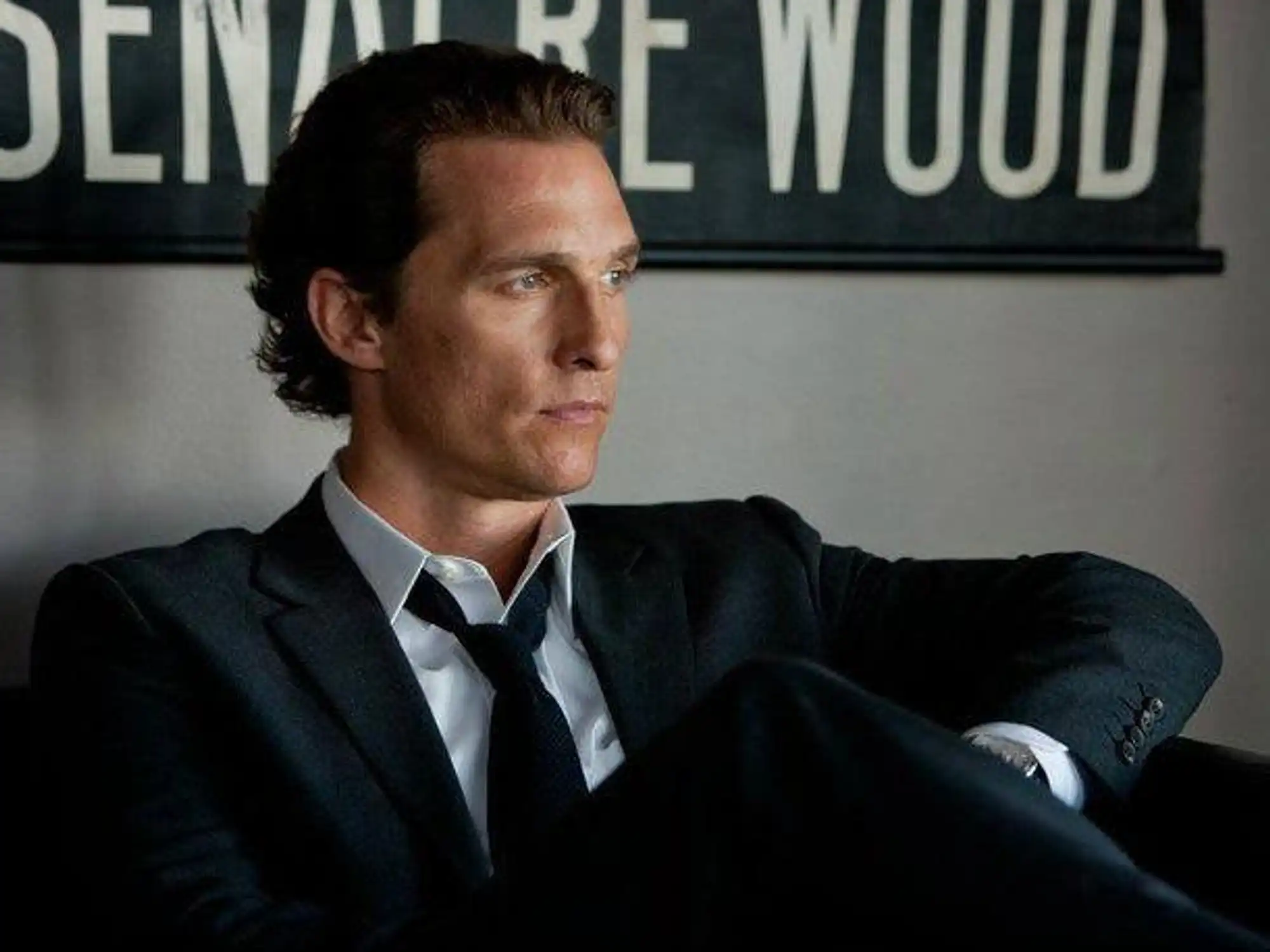
As artificial intelligence reshapes how media is made and distributed, Matthew McConaughey is moving to secure control over the elements of his identity most vulnerable to replication: his face and his voice.
In 2024, the U.S. Patent and Trademark Office approved eight trademarks tied to McConaughey’s likeness and speech, a move aimed squarely at preventing unauthorized AI-generated imitations.
The filings include both “motion marks” and “sound marks,” covering short video clips of the actor, one showing him seated near a fireplace and Christmas tree in his living room and another capturing him standing on a porch, as well as brief audio recordings.
Among them are a clip of McConaughey saying, “Just keep livin’, right?” and another featuring his instantly recognizable line, “Alright, alright, alright,” first delivered in the 1993 cult classic Dazed and Confused. The trademarks are held by J.K. Livin Brands, which operates McConaughey’s Just Keep Livin apparel business.
“My team and I want to know that when my voice or likeness is ever used, it’s because I approved and signed off on it,” McConaughey told The Wall Street Journal. “We want to create a clear perimeter around ownership with consent and attribution the norm in an AI world.”
McConaughey’s move reflects a broader shift in Hollywood, where high-profile performers are increasingly turning to trademarks as a defensive measure against AI misuse. While A-list actors can afford to pursue and enforce these protections, many working actors face a far more precarious situation, lacking both the legal resources and financial backing to do the same.
“Some actors fear a possible future in which studios will pressure them to sign away their likeness,” Scientific American reported in 2023, “and their digital double will take work away from them.”
Fears of AI displacing human performers surfaced during the 2023 contract negotiations between major studios and SAG-AFTRA, where protections around digital likeness became a central point of contention. As AI tools grow more capable, questions of ownership, consent, and control over identity are rapidly becoming some of the most urgent issues facing the entertainment industry.