
AI has made video creation accessible to almost anyone—but sound remains a glaring blind spot. Many AI video tools still ship silent clips, leaving creators with visuals that feel unfinished. Berlin-based startup Mirelo is betting that audio is the missing half of the equation.
Earlier this year, the two-year-old company released Mirelo SFX v1.5, an AI model that analyzes video content and automatically generates synchronized sound effects. The launch quickly caught the attention of venture capitalists eyeing the next wave of generative AI for games and media. Mirelo has now raised a $41 million seed round, according to reporting by TechCrunch.
The funding arrives as competition in video-to-audio accelerates. While Mirelo was still operating in stealth with limited resources, major players—including Sony, Tencent, ElevenLabs (also backed by a16z), and China’s Kling AI—released their own video-to-SFX or video-to-audio models. Mirelo’s edge, however, lies in its narrower focus: sound effects first, not everything at once.
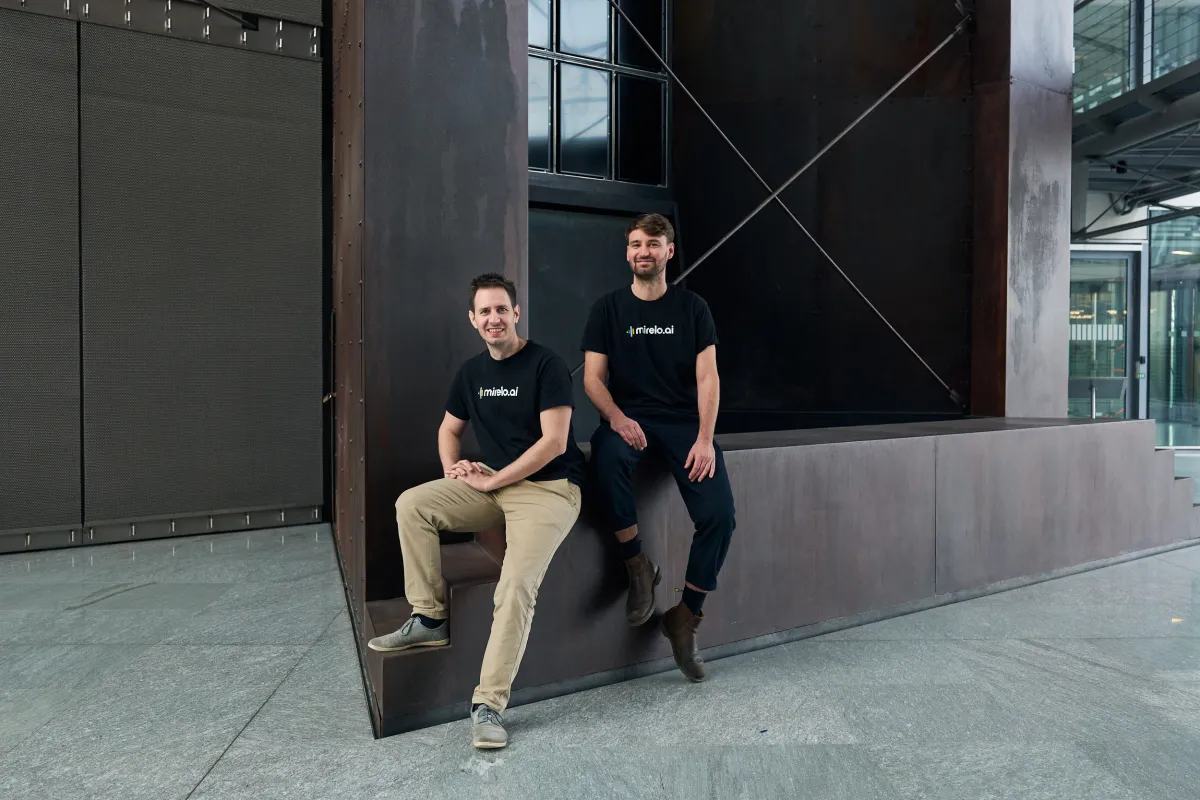
Maintaining that edge will require scale. The company plans to grow its 10-person team to double or even triple its size by the end of next year, according to CEO and co-founder CJ Simon-Gabriel. New hires will support research and development, as well as product and go-to-market efforts.
For now, Mirelo’s business leans heavily toward developers. Its models are available via platforms like Fal.ai and Replicate, and API usage is expected to drive near-term revenue. At the same time, the company is investing in Mirelo Studio, a creator-facing workspace that could eventually support professional production workflows.
As generative AI faces growing scrutiny around training data, Mirelo and its investors say they are taking a cautious approach. The company trained its models on public and licensed sound libraries and is pursuing revenue-sharing partnerships designed to respect artists’ rights.
Mirelo isn’t positioning itself as a replacement for sound designers—at least not yet. With a freemium model and a recommended €20-per-month creator plan, the product is aimed largely at amateurs and prosumers who want to bring AI-generated videos to life.
According to Simon-Gabriel, creators can’t fully benefit from this new potential without audio. He points to George Lucas’s famous claim that sound accounts for half of the moviegoing experience. “If anything, it’s an understatement. You can take exactly the same images, and the sound will shape a completely different ambience, depending on the sound and the music that you put in there.”
Both Simon-Gabriel and co-founder Florian Wenzel are AI researchers and musicians, and AI-generated music is on Mirelo’s roadmap. For now, the company sees stronger demand—and a clearer competitive moat—in sound effects, a less crowded research area than music generation.
That strategy appears to be paying off. While Mirelo declined to disclose its valuation, Simon-Gabriel said it increased “very significantly” from the company’s earlier, undisclosed pre-seed round. Including that earlier funding, Mirelo has now raised a total of $44 million.
The startup is also backed by prominent angels from across the AI ecosystem, lending both credibility and potential strategic access.
Still, Mirelo’s leadership knows silence won’t define AI video forever. Large models are beginning to ship with built-in audio, including new video generators that automatically add soundtracks.
Rather than seeing this as a threat, Simon-Gabriel views it as validation. “Now, suddenly, people realize, ‘Oh, maybe we should add sound.’ But, of course, you should add some. It’s a bit like silent movies versus talkies, right? It does make quite a difference!”